
What is a Gold IRA?
A Gold IRA is a self-directed individual retirement account that holds physical precious metals instead of only stocks, bonds or mutual funds. It follows the same IRS rules as any other IRA. The difference is what’s inside it: real coins and bars, held for your account at a secure depository.
Most clients fund a Gold IRA by moving part of an existing retirement account. You choose how much to move, and the rest of your portfolio stays where it is.
At a glance
ACCOUNT TYPE
Self-directed Traditional, Roth or SEP IRA
WHAT IT HOLDS
IRS-approved gold, silver, platinum and palladium
WHO ADMINISTERS IT
An IRS-approved custodian, such as Entrust Group
WHERE IT IS KEPT
An IRS-approved depository, insured and audited
TAX TREATMENT
Same rules as the type of IRA you open
Why people add metals to their retirement
After years of saving, many people want part of their retirement in something that doesn’t move in step with the stock market.
Diversification
Physical metals are a different asset class from the stocks, bonds and cash that make up most retirement accounts.
A long track record
Gold and silver have historically held value through periods of inflation, currency weakness and market stress.
Something real
Your IRA owns actual coins and bars, not a fund or a promise, held in a depository for your account.
No investment is risk-free. Metal prices go up and down, and metals don’t pay dividends or interest.
Which accounts can be moved?
Most retirement accounts can fund a Gold IRA. Employer plans like a 401(k) or TSP can usually be moved after you leave that employer, and some plans allow it while you’re still working.
Not sure about your plan? A specialist can check its rules with you on the phone.
How to open a Gold IRA in four steps
- 1
Call an IRA specialist
Talk through your goals and your current accounts, and get every question answered before anything moves.
- 2
Open your self-directed IRA
We help you open the account with an IRS-approved custodian, such as Entrust Group, and complete the paperwork with you.
- 3
Fund it by transfer or rollover
Your chosen amount moves from your current account to your new IRA. Your specialist tracks it until it lands.
- 4
Choose your metals
Select IRS-approved gold and silver. Your metals ship directly to the depository, held for your IRA.
★★★★★
“We decided on using this company after vetting many other choices… the process of transferring was smooth, secure, quick… We highly recommend them.”
Michael W · Better Business Bureau review, 01/23/2026
Transfer or rollover: two ways to move your money
Both are allowed by the IRS. The difference is whether the money ever passes through your hands.
MOST COMMON
Direct transfer
- Moves straight from your current custodian to your new IRA
- No check is made out to you
- No mandatory tax withholding
- No limit on how many you can do in a year
MORE STEPS
Indirect rollover
- Funds are paid to you first
- You have 60 days to deposit them into the new IRA
- Employer plans generally withhold 20% for taxes
- Limited to one IRA-to-IRA rollover per 12 months
Missing the 60-day deadline can make the money taxable. This is general information, not tax advice; check your situation with a tax professional.
What can go in your IRA
The IRS sets minimum purity standards for IRA metals. Rare, collectible and numismatic coins are not allowed.

Gold 99.5%
American Gold Eagles are also allowed by law, even though they are 91.67% gold.
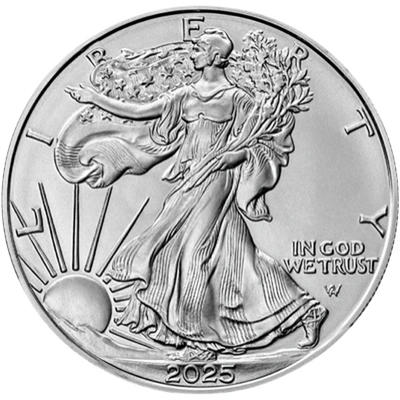
Silver 99.9%
Including American Silver Eagles and other qualifying coins and bars.
Platinum 99.95%
Qualifying coins and bars from approved refiners and mints.
Palladium 99.95%
Qualifying coins and bars from approved refiners and mints.
Where your metals are stored
IRS rules require IRA metals to be held by an approved depository, not at home. If you take personal possession of IRA metals, the IRS can treat it as a taxable distribution.
- Held at an IRS-approved, insured depository
- Regularly audited, with statements from your custodian
- Segregated or commingled storage, depending on the depository
- Up to 3 years of free storage with the Liberty Bundle*
CUSTODIAN & DEPOSITORY PARTNERS
CUSTODIAN

Self-directed IRA administration
DEPOSITORY

Wilmington, DE · Nevada
DEPOSITORY
Salt Lake City, UT · Los Angeles, CA
DEPOSITORY
Dallas, TX
2026 contribution limits
Transfers and rollovers don’t count toward these limits, so you can move an existing balance of any size. These limits apply to new contributions.
Source: IRS, 2026 cost-of-living adjustments. Roth IRA eligibility depends on income.
Gold IRA FAQs
Will moving my retirement money trigger taxes?
A direct transfer between IRA custodians, or a direct rollover from an employer plan, is generally not a taxable event when it is done correctly. Indirect rollovers carry more risk because of the 60-day deadline and withholding. Your tax professional can confirm how the rules apply to you.
Can I keep my IRA gold at home?
No. IRS rules require IRA metals to be held by an approved depository. Taking personal possession of IRA metals can be treated as a distribution, with taxes and possible penalties.
Can I move only part of my account?
Yes. You decide how much to move. Many clients move a portion and leave the rest of their account where it is.
What does a Gold IRA cost?
Custodians charge account fees and depositories charge storage fees, and both vary by provider. Your specialist will walk you through every cost before you sign anything. Ask about up to 3 years of free storage with the Liberty Bundle.*
When can I take distributions?
The same rules apply as any IRA. Withdrawals are generally penalty-free after age 59½, and required minimum distributions from a Traditional IRA generally begin at age 73. You can take a distribution in cash, or have the metals shipped to you in kind, which is taxed like any other distribution.
What are the tax advantages?
A Traditional Gold IRA grows tax-deferred, so gains are not taxed until you withdraw. With a Roth Gold IRA, qualified withdrawals can be tax-free. A tax professional can tell you how this applies to you.
Why include silver?
Silver has a lower price per ounce than gold, which gives you more flexibility in how you build your holdings, and it has strong industrial demand. Many clients hold a mix of gold and silver.
How long does the process take?
It depends mostly on how quickly your current custodian releases the funds. Your specialist stays in touch with both custodians and keeps you updated until your metals are in the depository.
This page is general educational information, not personalized financial, investment or tax advice. Rules and limits can change.