

- GOLD - $2,371.45
- SILVER - $28.00
- PLATINUM - $948.88
- PALLADIUM - $977.00
- GOLD - $2,371.45
- SILVER - $28.00
- PLATINUM - $948.88
- PALLADIUM - $977.00
- GOLD - $2,371.45
- SILVER - $28.00
- PLATINUM - $948.88
- PALLADIUM - $977.00
Most Americans are watching the stock market. But right now, the more important story is happening in the bond market — and it has direct implications for anyone trying to protect their financial future.
Here is what major financial outlets are reporting today and why it matters.
According to CNBC, Treasury yields rose again today as ceasefire talks between the US and Iran showed signs of stalling. Iran has rejected Washington’s peace proposal and presented its own terms — including sovereignty over the Strait of Hormuz, a waterway responsible for roughly 20 percent of the world’s daily oil supply.
The Associated Press reported that oil prices climbed back above $100 per barrel as uncertainty over the strait intensified, while the S&P 500 fell 1.4 percent — on pace for its fifth consecutive losing week, the longest such streak in nearly four years.
MarketWatch has noted that the bond market is now approaching a critical threshold that analysts are watching closely as a potential trigger for Federal Reserve intervention.
These are not isolated headlines. They are part of a larger pattern that directly affects the purchasing power and financial security of everyday Americans.
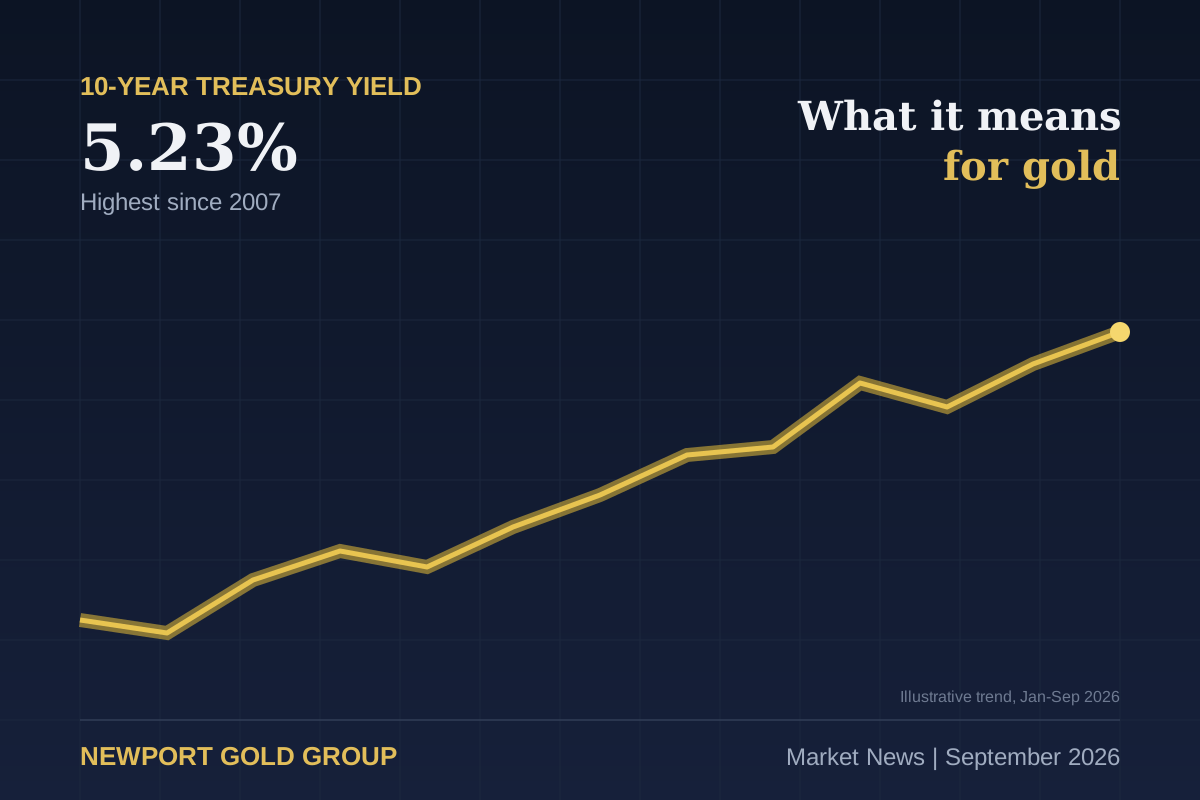
The US 10-Year Treasury Yield — one of the most closely watched indicators in global finance has risen sharply since the conflict in the Middle East began. According to CNBC, the yield has climbed from approximately 3.97 percent before the war to 4.41 percent as of today.
When Treasury yields rise rapidly it signals that investors are demanding higher returns to hold US government debt. This creates a ripple effect across the entire economy — higher borrowing costs, pressure on stocks and growing uncertainty about the direction of interest rates.
The Associated Press noted that this surge has already pushed 30-year mortgage rates to 6.43 percent — the highest level since October — directly impacting American households trying to buy homes or refinance existing loans.
Historically, rapid surges in Treasury yields have preceded major policy shifts from both the Federal Reserve and the White House.
Here is where it gets important for everyday investors.
Despite the inflationary pressures driving yields higher, many analysts believe the bond market itself will ultimately force a policy reversal. MarketWatch has noted that the bond market is approaching a threshold that has historically triggered intervention — not rate hikes, but the opposite.
The reasoning is straightforward. According to the Associated Press, the US labor market is showing persistent weakness. A weakening labor market combined with rising borrowing costs creates conditions that the economy historically cannot sustain for long. When that breaking point arrives, the Federal Reserve and the federal government face a choice — allow the economy to contract sharply, or intervene.
History suggests intervention wins. And intervention in this context likely means:
Each of these outcomes has one thing in common. They increase the supply of money in the financial system and historically reduce the purchasing power of cash and traditional fixed income assets.
For investors, the question is not whether intervention will happen. Based on historical patterns, the question is when — and whether they are positioned ahead of it or reacting to it after the fact.
Gold has historically performed well in environments where:
According to CNBC, traders have now largely priced out any Federal Reserve rate cuts for 2026, with some market participants pricing in the possibility of a rate hike instead. This reflects an environment where inflation concerns are competing directly with labor market weakness — a combination that has historically been one of the most challenging for traditional stock and bond portfolios.
Throughout history, when financial systems face this level of stress, investors have turned to gold as a store of value — an asset that cannot be printed, diluted or inflated away. Whether the next move is higher rates, lower rates or a return to quantitative easing, gold has historically performed well across all three scenarios.
The bond market is not just a story for Wall Street. It is a signal about the health of the broader economy and the purchasing power of your savings. What CNBC, the Associated Press and MarketWatch are reporting today is not noise — it is the kind of environment that has historically driven investors toward assets that hold their value regardless of what central banks or governments decide to do next.
Understanding what these signals mean — and positioning accordingly — is what separates informed investors from those who are simply reacting after the fact.
This information is presented for educational purposes only and does not constitute investment advice. All market data and news references are sourced from publicly available reporting by CNBC, the Associated Press and MarketWatch. Newport Gold Group encourages all clients to consult a qualified financial professional before making any investment decisions.
06 March, 2026
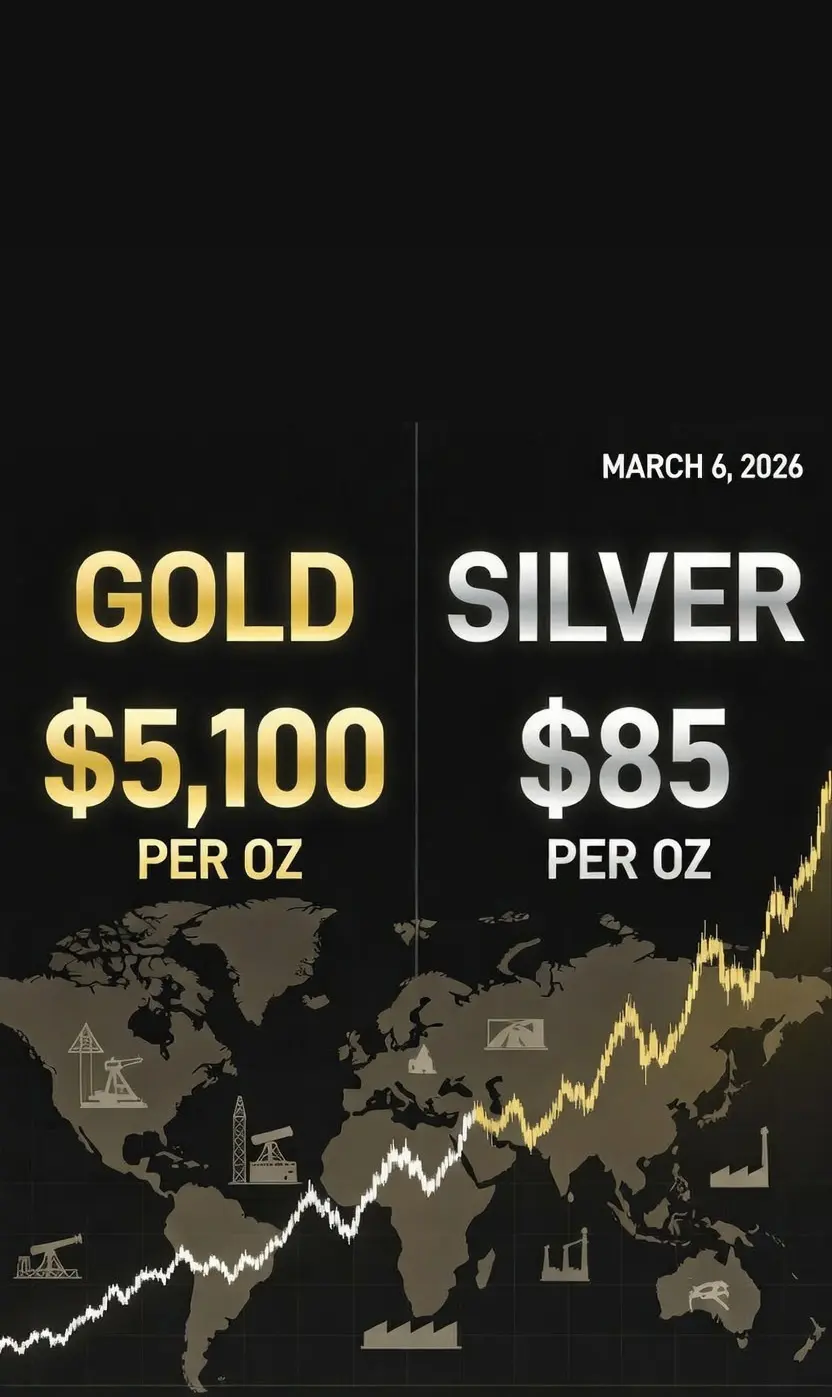
Gold Holds Above $5,100 Amid Ongoing U.S.-Israel-Iran Conflict and Strait of Hormuz Blockade Geopolitical escalation in the Middle East continues to fuel safe-haven demand for...
Read More
21 November, 2025
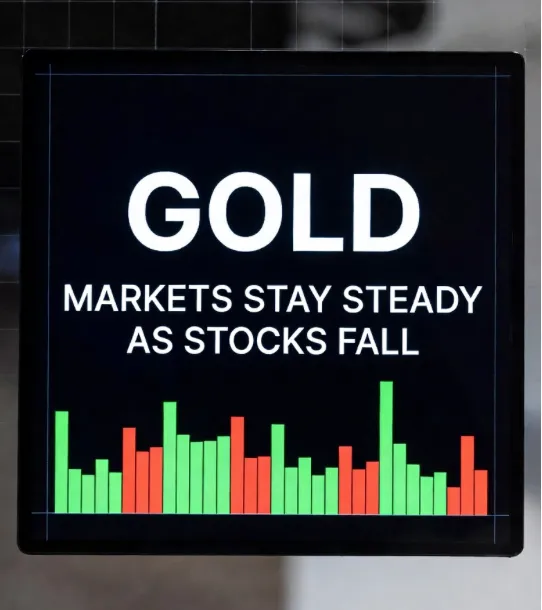
Gold Market Update Markets Fall Hard Yesterday – Gold Stays Strong Yesterday was another rough session on Wall Street. The major indexes closed sharply lower...
Read More
19 July, 2024
Gold’s Golden Moment: Why the Dollar’s Decline Fuels a Precious Metal Surge The U.S. dollar has dropped nearly 10% against major currencies since January 2025,...
Read More