


NewportGoldGroup

  • GOLD - $2,371.45
  • SILVER - $28.00
  • PLATINUM - $948.88
  • PALLADIUM - $977.00
  • GOLD - $2,371.45
  • SILVER - $28.00
  • PLATINUM - $948.88
  • PALLADIUM - $977.00
  • GOLD - $2,371.45
  • SILVER - $28.00
  • PLATINUM - $948.88
  • PALLADIUM - $977.00

Treasury Yields Hit a 19-Year High: What It Means for Gold and Your Retirement

Newport Gold Group  |  September 30, 2026

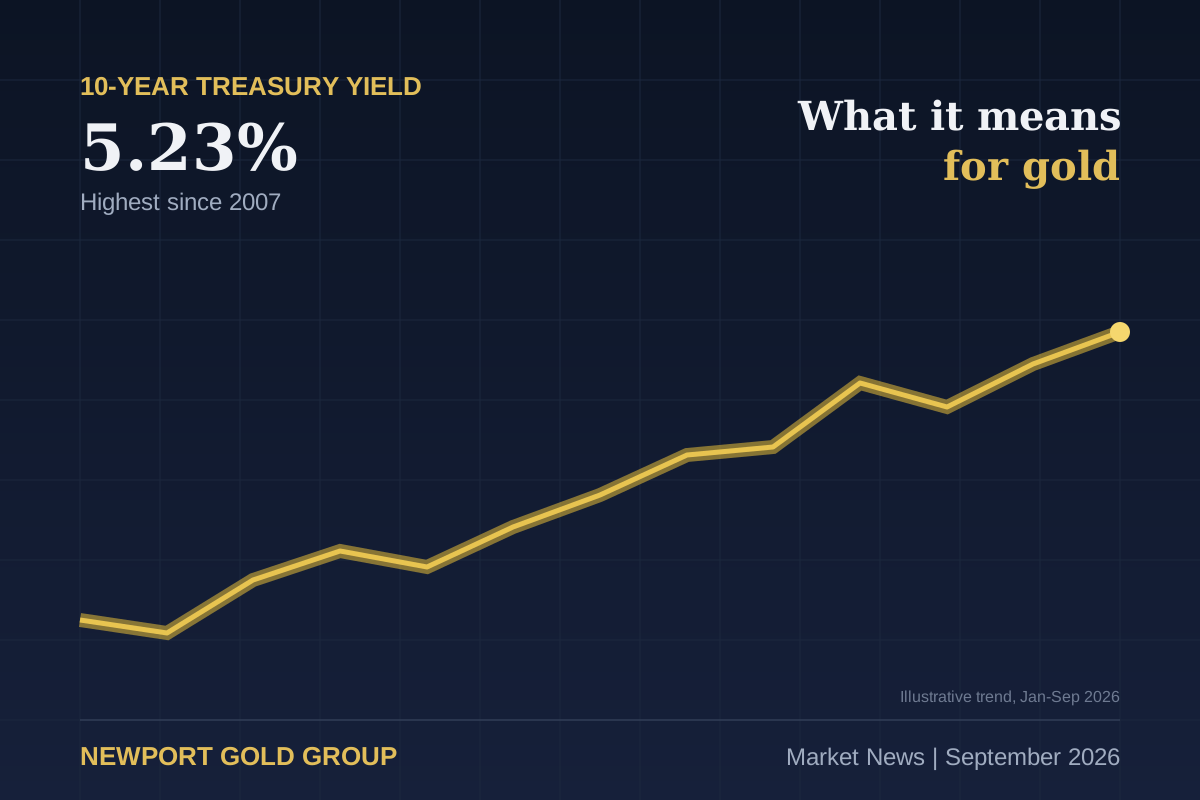
10-year Treasury yield at 5.23%, the highest since 2007, and what it means for gold

Key Takeaways

  • The 10-year Treasury yield reached 5.23% in late September 2026, its highest level since 2007, driven by sticky inflation, heavy government borrowing and elevated energy prices.
  • The Federal Reserve raised rates for the first time since 2023 and signaled inflation remains its top priority, which means borrowing costs may stay higher for longer.
  • Gold pulled back in September as yields rose, but it remains up for the year, and record central bank buying continues to support its long-term outlook.

Most Americans keep an eye on the stock market. Right now, though, the bigger story is in the bond market. Treasury yields have surged to levels not seen in nearly two decades, and that affects everything from mortgage rates to the value of the bonds sitting in many retirement accounts.

Here is what is happening, why it matters for your savings, and where gold fits in.

Why Are Treasury Yields Rising?

Treasury yields are rising because investors are demanding more compensation to hold US government debt while inflation stays stubbornly high and the government continues to borrow heavily.

According to CNBC, the 10-year yield hit 5.23% on September 25, its highest level since 2007. CNN reported that the same yield started 2026 at roughly 4.15%. Reuters noted that the 10-year yield rose 81 basis points during the July-to-September quarter alone, the steepest quarterly climb since 2022.

What Is Driving the Move

  • Sticky inflation: The University of Michigan survey showed year-ahead inflation expectations jumping to 4.6% in September, up from 4% in August, according to CNBC.
  • Heavy government borrowing: CNBC reported that elevated bond issuance, including borrowing tied to the massive AI investment boom, is adding supply to the market.
  • Energy prices: The ongoing conflict in the Middle East has kept oil elevated. Bloomberg described the rise in yields as part of a broader global bond selloff fueled by energy costs.

Why It Matters for Households

The 10-year yield is the benchmark for mortgages, auto loans and business borrowing. As it rises, borrowing gets more expensive across the economy. The 30-year Treasury yield has also climbed to its highest level since 2002, according to CNBC.

What Did the Federal Reserve Do?

On September 16, the Federal Reserve raised its benchmark rate by a quarter point to a range of 3.75% to 4%. It was the Fed’s first rate hike since 2023, and officials signaled another increase could come before the end of the year.

Fed Chairman Kevin Warsh made clear that inflation is the central bank’s top priority. According to CNN, Warsh pointed to three changes since the Fed’s July meeting: the economy strengthened, inflation did not slow, and geopolitical tensions intensified.

TheStreet reported that, according to one market analyst, the Fed’s own projections pushed the timeline for returning to its 2% core inflation target out to 2029.

What a Hawkish Fed Means for Savers

If inflation stays above the Fed’s target for several more years, cash and fixed income lose purchasing power over that stretch. A savings balance that looks stable on paper can buy less each year.

Are Stocks and Bonds Both Under Pressure?

Traditional portfolios lean heavily on stocks and bonds, and right now both face real headwinds.

  • Bonds: When yields rise, existing bond prices fall. Reuters described the third quarter as a brutal stretch for bond markets, and noted that some investors remain cautious about long-dated bonds given concerns about high government debt.
  • Stocks: Fortune reported that investors are now earning less than one percentage point of extra expected return for owning stocks instead of inflation-protected Treasuries, compared with a historical average of roughly 3.5 points. In plain terms, stocks are offering very little extra reward for their added risk.

When both sides of a traditional portfolio are under pressure at the same time, many investors look for assets that behave differently.

Why Did Gold Pull Back?

Gold pulled back because rising yields and a hawkish Fed increase the opportunity cost of holding an asset that does not pay interest.

According to Metal.com, gold fell roughly 6% in September but remains up about 8% for the year. Earlier this week, Reuters reported that spot gold dropped as much as 4% in one session to around $4,111 per ounce before rebounding the following day, even as the 30-year Treasury yield touched a multi-decade high.

Gold set a record near $5,600 per ounce in January. Corrections within a longer-term uptrend have historically been a normal part of how gold markets move.

Why the Long-Term Case for Gold Remains Intact

Interest-rate expectations can move gold over days and weeks. The forces that have supported gold over longer periods remain in place:

  • Record central bank demand: According to the World Gold Council, central banks purchased a net 289 tonnes of gold in the second quarter of 2026, the strongest second quarter on record, buying into price weakness rather than pulling back.
  • More buying expected: The World Gold Council’s survey found that 89% of responding central banks expect global gold reserves to rise over the next 12 months.
  • Persistent inflation: The Fed itself acknowledges inflation has been too high for too long. Gold has historically served as a store of value when inflation erodes the purchasing power of cash.
  • Rising debt costs: Higher yields mean higher interest payments on an already large national debt, a long-term pressure that does not disappear with one rate hike.
  • Geopolitical uncertainty: The ongoing conflict in the Middle East continues to affect energy prices and global markets.

What to Watch Next

Two reports will shape the next move: the September jobs report due Friday, October 2, and the September Consumer Price Index on October 14. Hotter numbers could keep pressure on yields in the near term. Softer data could ease pressure on both bonds and gold.

Protect Your Retirement With Newport Gold Group

Headlines about yields and rate hikes can feel far removed from daily life, but they shape the value of the savings you are counting on in retirement. If much of your nest egg sits in stocks and bonds, now is a good time to review how diversified it really is.

A Gold IRA is a self-directed retirement account that holds IRS-approved physical gold and silver, giving you exposure to precious metals with the same tax advantages as a traditional or Roth IRA. Many investors use a rollover from an existing 401(k) or IRA to fund one.

Our team can walk you through account setup, rollovers and eligible products, with no pressure. Call us at (844) 202-4937, contact us online, or download our free 2026 Gold IRA Guide.

FAQs

Why is the 10-year Treasury yield so high right now?

The 10-year yield reached its highest level since 2007 in September 2026 because of sticky inflation, heavy government bond issuance, elevated energy prices and expectations that the Fed will keep rates higher for longer.

Do rising interest rates hurt gold?

In the short term, rising rates can pressure gold because it does not pay interest. Over longer periods, gold’s price has been driven more by inflation, currency weakness, central bank demand and geopolitical risk, which remain supportive.

Why did the Fed raise rates in September 2026?

The Fed raised rates to 3.75%-4% because inflation remained elevated, the economy stayed strong and geopolitical tensions pushed energy prices higher. Chairman Warsh said inflation is the Fed’s top priority.

Should I sell gold when the Fed raises rates?

Short-term pullbacks are common, and many long-term holders view gold as a diversifier rather than a short-term trade. Any decision should reflect your own goals and time horizon, ideally with guidance from a qualified professional.

Can I hold physical gold in a retirement account?

Yes. A self-directed Gold IRA can hold IRS-approved gold and silver coins and bars. It can often be funded through a rollover or transfer from an existing 401(k) or IRA.

Sources

This information is presented for educational purposes only and does not constitute investment, tax or legal advice. Market data and news references are sourced from publicly available reporting. Past performance is not indicative of future results. Newport Gold Group encourages all clients to consult a qualified financial professional before making any investment decisions.

Most Recent News

golden-divider

26 March, 2026

Why the Bond Market Matters to Your Wealth

Why the Bond Market Matters to Your Wealth Most Americans are watching the stock market. But right now, the more important story is happening in...

Read More
golden-divider

06 March, 2026

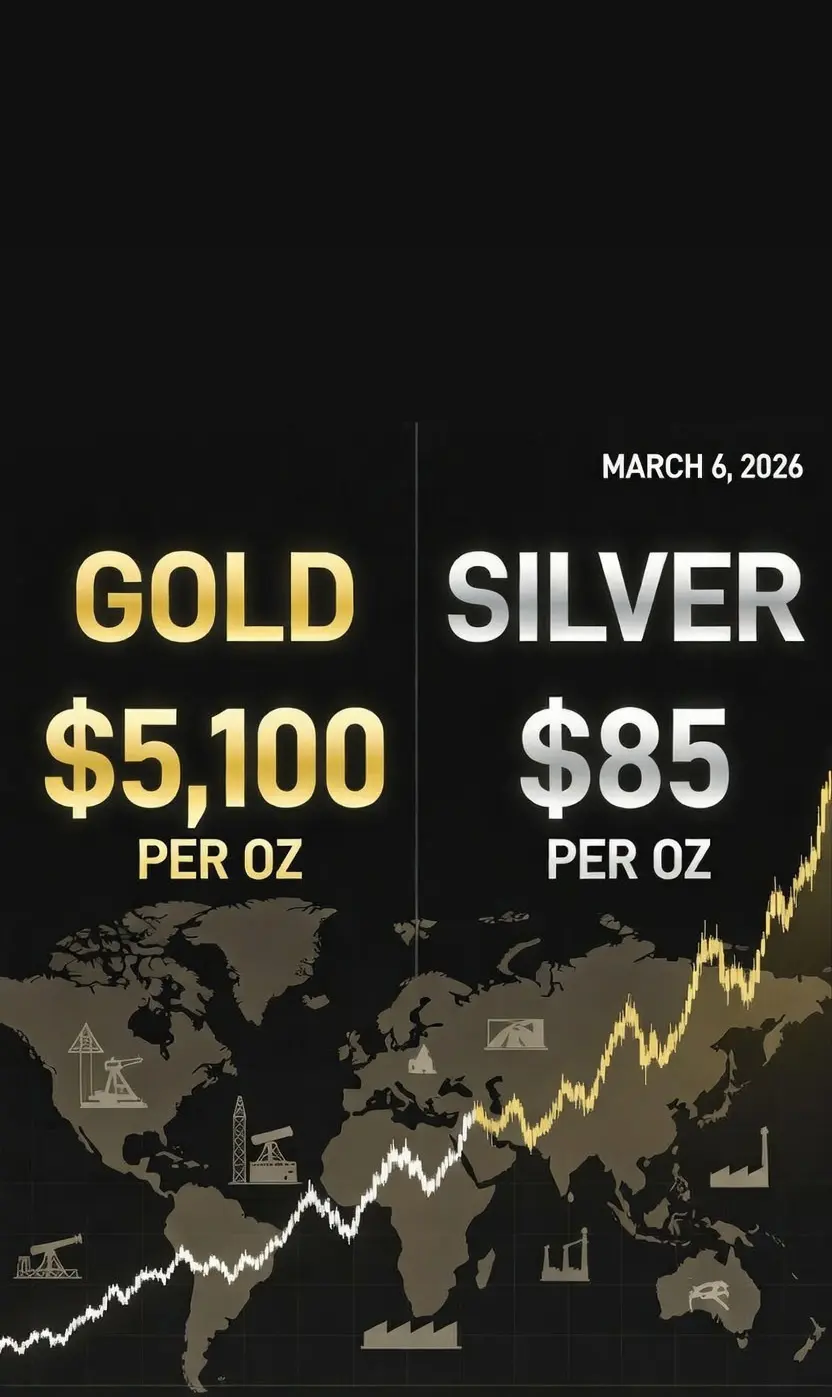
Gold Holds Above $5,100 Amid Ongoing U.S.-Israel-Iran Conflict and Strait of Hormuz Blockade

Gold Holds Above $5,100 Amid Ongoing U.S.-Israel-Iran Conflict and Strait of Hormuz Blockade Geopolitical escalation in the Middle East continues to fuel safe-haven demand for...

Read More
golden-divider

21 November, 2025

Gold Market Update

Gold Market Update Markets Fall Hard Yesterday – Gold Stays Strong Yesterday was another rough session on Wall Street. The major indexes closed sharply lower...

Read More